Why answer engine optimisation (AEO) now matters as much as SEO
Your customers are asking ChatGPT, Perplexity and Google’s AI Overviews for recommendations. Here’s how AEO works, and the practical steps to get your business cited.
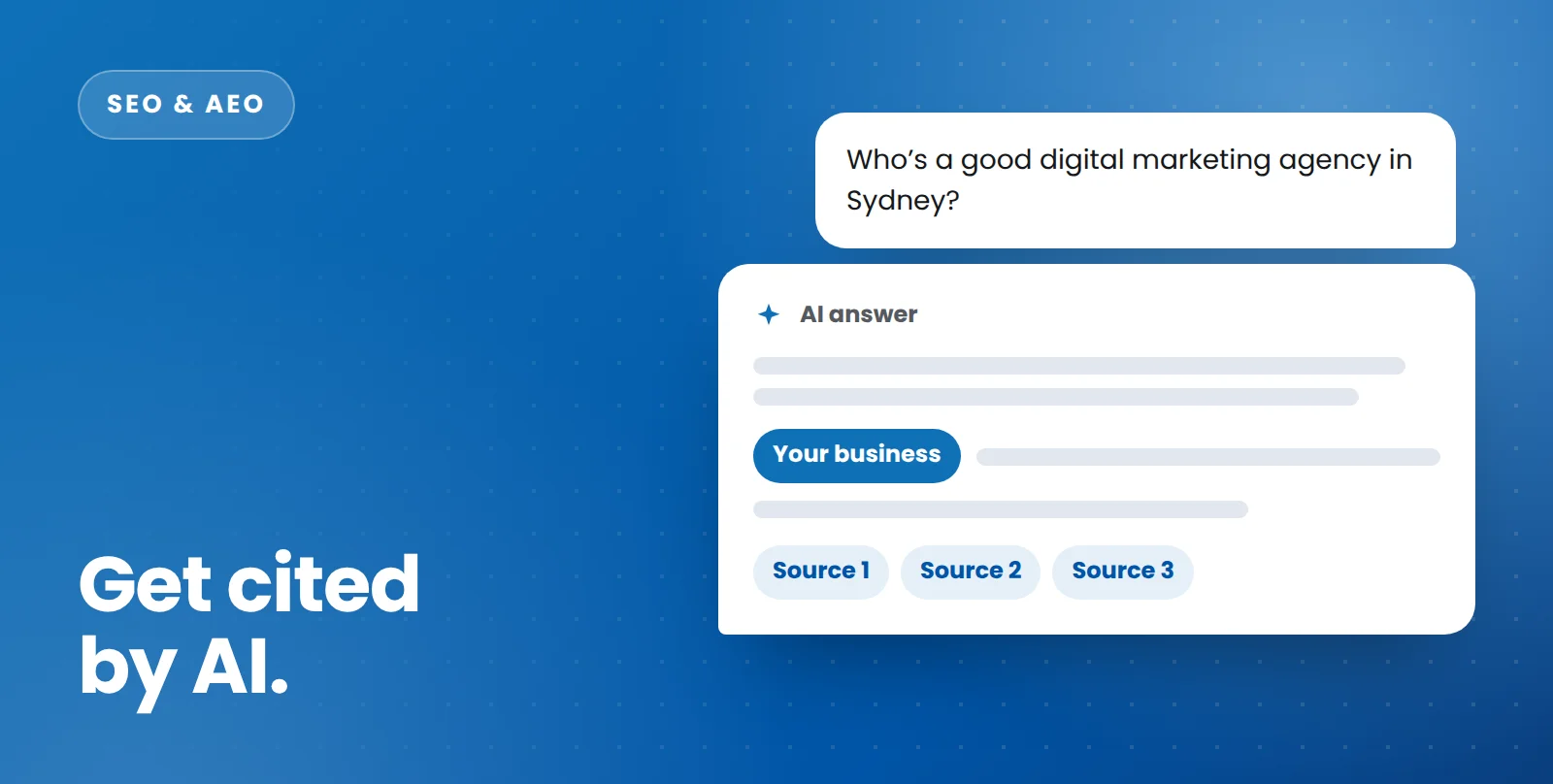
For twenty years, getting found online meant one thing: ranking on page one of Google. That still matters. But a growing share of your customers now start somewhere else — by asking a question in ChatGPT or Perplexity, or reading the AI-generated summary at the top of Google’s results before they click anything.
That shift has created a new discipline: answer engine optimisation, or AEO.
What is AEO?
AEO is the practice of making your website and content easy for AI tools to understand, trust and cite when they generate an answer. Where SEO asks “how do I rank for this keyword?”, AEO asks “when someone asks this question, will the AI mention my business?”
The “answer engines” that matter most right now are:
- Google AI Overviews and AI Mode — AI summaries shown directly in Google search
- ChatGPT — increasingly used to research products, services and local businesses
- Perplexity — an AI search engine that cites its sources
- Microsoft Copilot — built into Bing, Windows and Microsoft 365
Why it matters for your business
Fewer clicks, more decided buyers. When an AI answers a question directly, fewer people click through to websites. The ones who do click tend to be further along — they’ve already been told you’re a good option.
Recommendations carry weight. Being named in an AI answer works like a referral. If a customer asks “who’s a good mobile vet in Sydney’s east?” and your business is in the answer, you’re on the shortlist before they’ve seen a competitor’s ad.
Early movers have the advantage. Most small and medium businesses haven’t thought about AEO yet. The businesses that structure their content for AI now will be the ones AI tools learn to trust.
How AI tools choose what to cite
No one outside these companies knows exactly how each system decides, but the patterns are consistent. AI tools favour content that:
- Answers a specific question clearly, near the top of the page
- Comes from a credible source — a real business, with real people, reviews and a track record
- Is well structured — clear headings, short paragraphs, lists and FAQs
- Is consistent across the web — the same business name, address, services and details everywhere
- Is technically accessible — pages that load properly and can be crawled
Notice how much overlap there is with good SEO. AEO doesn’t replace SEO; it builds on it.
Seven practical steps to improve your AEO
- Write down the questions your customers actually ask. Your sales calls, emails and enquiry forms are full of them. Each one is a potential page, FAQ or article.
- Answer each question directly, then expand. Lead with a clear one or two-sentence answer before the detail. AI tools often lift exactly that kind of summary.
- Add FAQ sections to your service pages. Short, specific questions and answers are some of the easiest content for AI to use.
- Use structured data (schema markup). Schema tells search engines and AI tools, in a machine-readable way, what your business is, where it is, what you offer and what your FAQs say.
- Keep your Google Business Profile complete and current. Hours, services, photos, and especially reviews. Local AI answers lean heavily on this information.
- Build credibility signals. Case studies with real numbers, named team members, genuine reviews and mentions on reputable industry sites all help establish trust.
- Check what the AI already says about you. Ask ChatGPT, Perplexity and Google the questions your customers would ask. Note whether you appear, what’s said, and who appears instead.
How to measure it
AEO is harder to measure than traditional rankings, but you can track it. Look for referral traffic from AI tools in Google Analytics (sources like chatgpt.com and perplexity.ai), watch for branded searches increasing, and run a regular set of test questions to see whether your business is being mentioned.
Where to start
If you only do one thing this month, make it step one: list the ten questions customers ask most often before they buy, and check whether your website answers each of them clearly. Most businesses find gaps straight away.
Our SEO & AEO service covers all of this — from technical fixes and structured data to new content written to answer real customer questions. If you’d like to know how visible your business is in AI answers today, ask us for a free check.
Talk to our team
Whether it’s ads, SEO, email or your website, we’ll give you clear, practical advice for your business.