SEO vs PPC: which is right for your business?
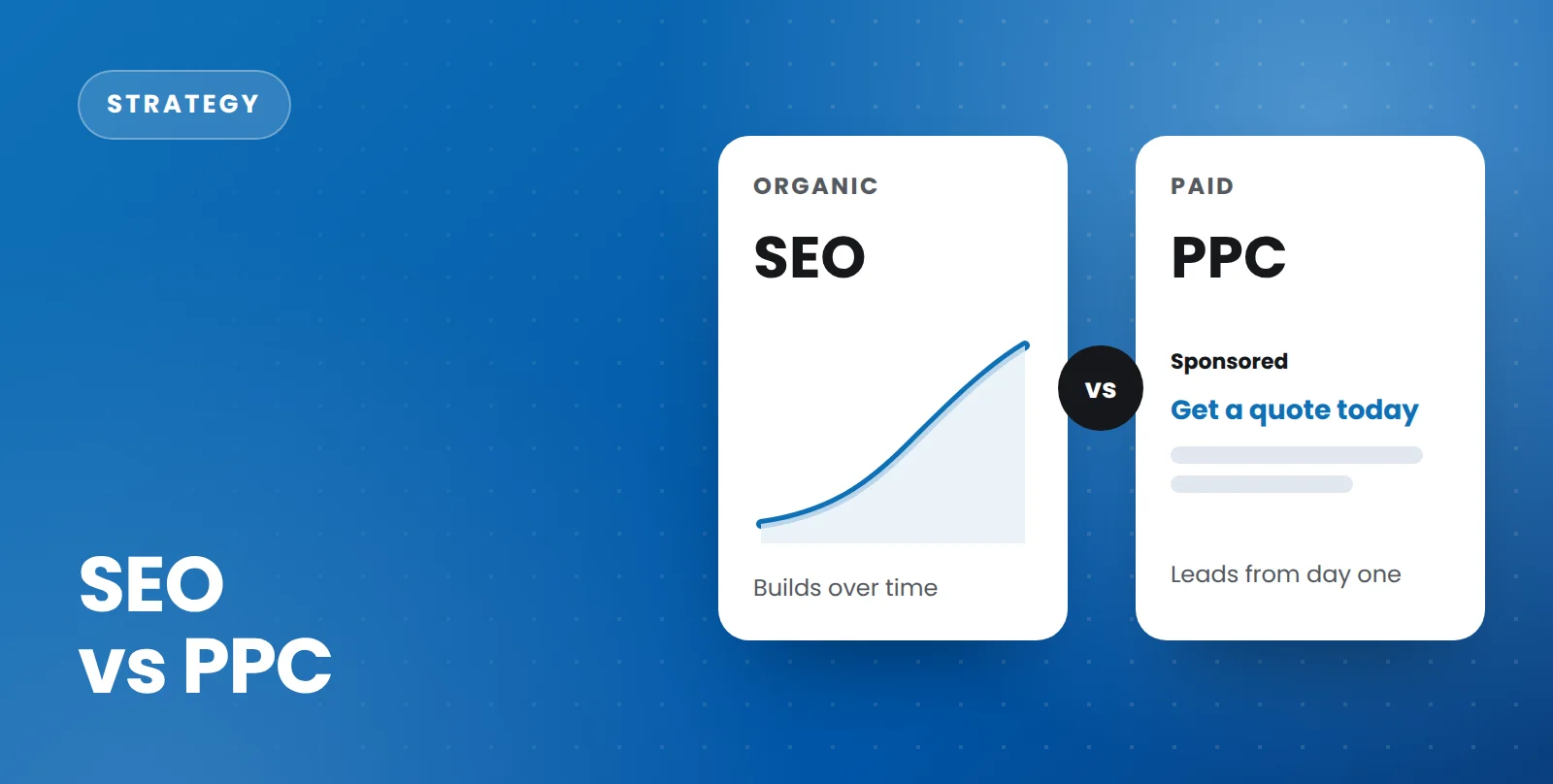
SEO builds lasting visibility; PPC delivers leads from day one. Here’s how the two compare on cost, speed and control — and why the best results usually come from using both.
It’s one of the questions we’re asked most often: “Should we invest in SEO or Google Ads?” The honest answer is that it depends on your goals, your timeline and your budget — and for most businesses, the best answer is a mix of both.
Here’s how the two compare, so you can decide what’s right for you.
What’s the difference?
SEO (search engine optimisation) is the work of improving your website so it appears in Google’s free, “organic” results — and, increasingly, in AI answers from tools like Google’s AI Overviews and ChatGPT. You don’t pay per click, but you invest time and expertise in content, technical fixes and building credibility.
PPC (pay-per-click) — for most businesses, Google Ads — puts your ads at the top of search results straight away. You pay each time someone clicks, and your visibility stops when your budget does.
SEO vs PPC at a glance
| SEO | PPC (Google Ads) | |
|---|---|---|
| Speed | Builds over months | Traffic from day one |
| Cost model | Ongoing investment in work, no cost per click | Pay for every click |
| When you stop | Rankings fade gradually | Traffic stops immediately |
| Control | Limited — Google decides rankings | High — you choose keywords, budget, ads and timing |
| Testing | Slow to test changes | Fast to test offers and messages |
| Trust | Many searchers trust organic results more | Clearly labelled as ads |
| Best for | Long-term growth and lower acquisition costs over time | Immediate leads, launches, promotions and seasonal peaks |
When PPC makes more sense
- You need leads now. A new business, a new service or a quiet month — Google Ads can start generating enquiries within days.
- You’re running a time-limited offer. Sales, EOFY promotions and seasonal campaigns suit ads you can switch on and off.
- Your market is highly competitive in organic search. If the top organic results are dominated by big national brands, ads can put you alongside them immediately.
- You want to test before you commit. Ads show you quickly which keywords and messages actually turn into customers.
When SEO makes more sense
- You’re planning for the long term. Good rankings keep delivering traffic without a cost for every click.
- Your cost per click is high. In industries like legal, finance and trades, clicks can be expensive — ranking organically for the same terms can lower your overall cost per lead over time.
- Your customers research before they buy. Helpful content that answers their questions builds trust well before they’re ready to enquire.
- You want to appear in AI answers. Being cited by AI tools relies on the same foundations as good SEO: clear, credible, well-structured content.
Why the best answer is usually both
SEO and PPC work better together than either does alone:
- PPC data makes SEO smarter. Google Ads tells you exactly which searches convert into customers. Those are the keywords worth ranking for organically.
- SEO lowers your reliance on ads. As organic rankings grow for your best keywords, you can reduce ad spend on those terms and redirect budget elsewhere.
- You take up more of the page. Appearing in both the ads and organic results for the same search builds credibility and increases the chance someone clicks through to you.
- Remarketing connects the two. Visitors who find you through SEO can be reached again with ads if they didn’t enquire the first time.
A common approach is to start with Google Ads to generate leads and learn what converts, while building SEO in the background. Over time, the balance shifts as organic traffic grows.
How to decide your split
Ask yourself three questions:
- How quickly do you need results? The sooner, the more weight on PPC.
- How long is your planning horizon? The longer, the more weight on SEO.
- What does a customer cost you today? If paid clicks are expensive, SEO can pay for itself faster.
As a full-service agency, we manage both — so the recommendation isn’t about which service we sell, it’s about which mix will grow your business. If you’d like advice on the right split for your budget, ask us for a free audit.
Talk to our team
Whether it’s ads, SEO, email or your website, we’ll give you clear, practical advice for your business.