
Turn past customers into repeat customers.
Email campaigns and automated flows that bring people back — designed, written and reported on by the same team running your ads.
Every plan includes
- Email platform and list review
- Campaign calendar and strategy
- Design and copywriting
- Automated flows
- Testing and deliverability checks
- Monthly reporting on revenue

Why email still works
You own the audience
No algorithm changes or rising click costs between you and your customers.
Automation works around the clock
Welcome, cart and follow-up emails send themselves at the right moment.
Joined up with your ads
One team planning offers across search, social and email.
Reporting you can actually read
Every campaign comes with clear reporting on who received it, opened it and clicked, and we test subject lines to keep improving results.


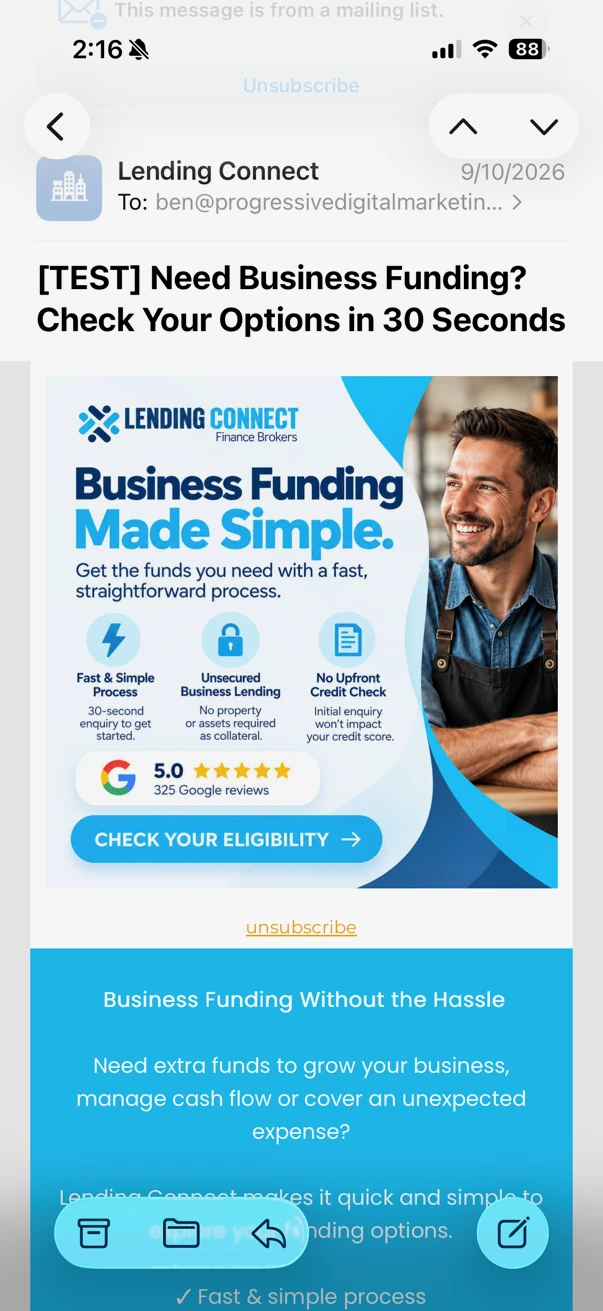
Example from a real client email campaign.
How we run your email marketing
List & platform audit
We review your email platform, list health and past results.
Strategy & calendar
A campaign calendar built around your promotions and seasons.
Design & copy
On-brand, mobile-friendly emails written to get the click.
Automations
Welcome, abandoned cart, post-purchase and win-back flows.
Send & test
Subject lines, timing and content tested every send.
Report
Opens, clicks and — most importantly — revenue, every month.
What we build
- Welcome series
- Abandoned cart
- Promotions & newsletters
- Post-purchase follow-ups
- Win-back campaigns
- Replenishment reminders
Emails our design team has built
Every email is designed in-house to match your brand, built to look right on desktop, tablet and phone, and written to get the click.

“We also use Progressive for email marketing and find them very helpful in designing a good marketing campaign.”
Questions we get asked
Is email marketing still effective in 2026?
Email remains a valuable marketing channel because businesses can communicate directly with subscribers who have chosen to hear from them. Relevant offers, personalised messaging and automated campaigns can support repeat purchases, customer retention and revenue growth without relying entirely on paid advertising.
What is a good email marketing open rate?
Open rates vary considerably by industry, audience and campaign type. They can also be inflated by privacy features that automatically load email content. Click-through rates, conversions, revenue per recipient and unsubscribe rates often provide a more reliable picture of email marketing performance.
How often should a business send marketing emails?
The ideal frequency depends on customer expectations, buying cycles and the value of the content. Some ecommerce businesses benefit from weekly promotions, while service businesses may send monthly updates. Engagement, unsubscribes and revenue trends should guide the frequency rather than following a fixed schedule.
What is the difference between email campaigns and email automation?
Email campaigns are typically sent to selected subscribers at a scheduled time, such as newsletters or promotional offers. Email automation sends messages based on triggers such as a welcome signup, abandoned cart or previous purchase. Automation allows businesses to deliver relevant messages at different stages of the customer journey.
How can businesses improve email marketing conversion rates?
Conversion rates can improve through audience segmentation, relevant offers, compelling subject lines, mobile-friendly design and clear calls to action. Maintaining a permission-based contact list and testing campaign content can also help businesses reach more engaged subscribers and generate better results.
Is your customer list working as hard as your ads?
Request a free, no-obligation review — we’ll show you exactly what we’d change.