Google is switching off call-only ads in February 2027: what Sydney businesses need to do now
Google Ads is retiring call-only ads. In February 2027 every existing call-only ad stops showing. Here’s how to check your account and move to responsive search ads with call assets before the Christmas shutdown.
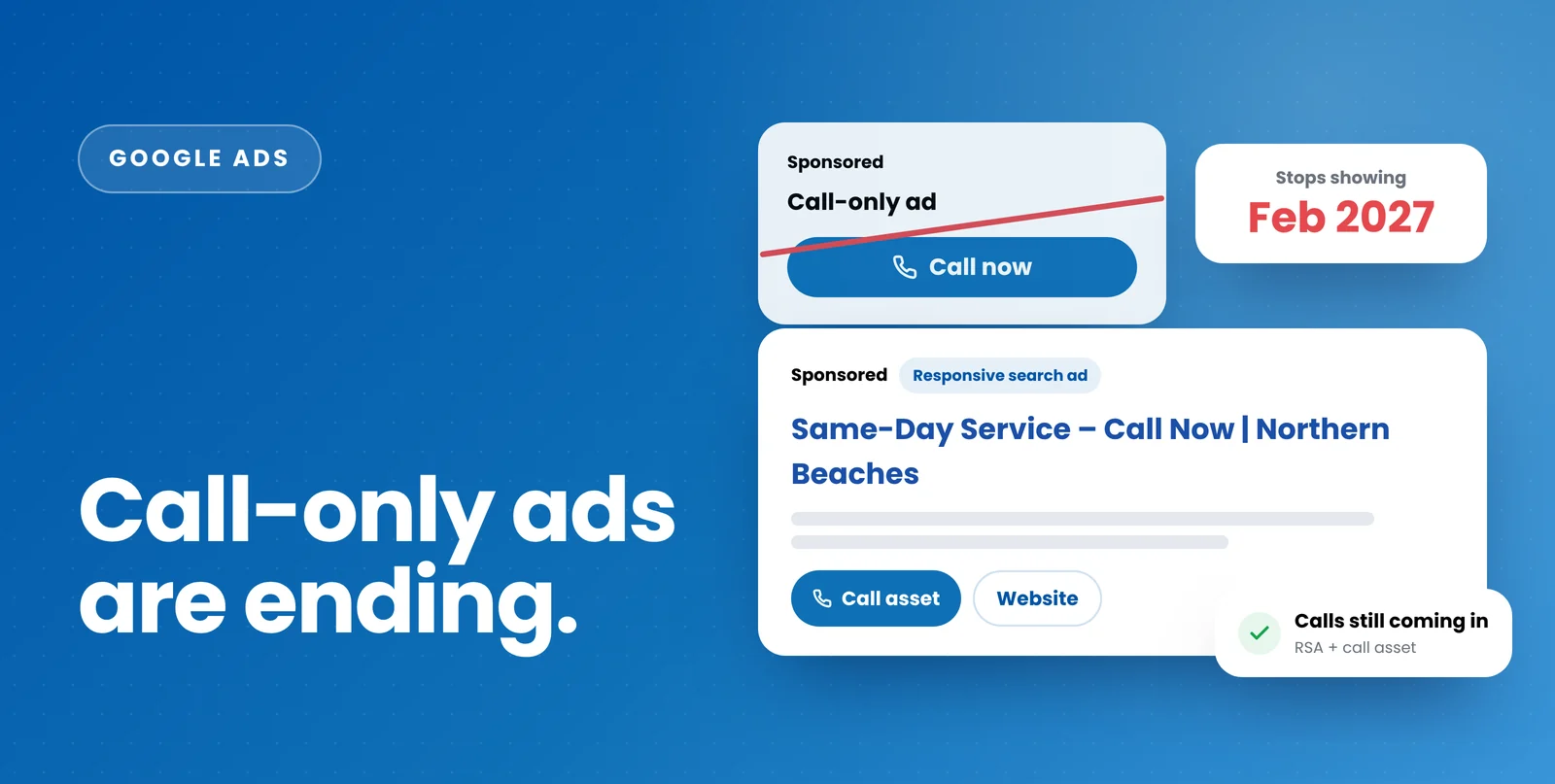
Quick answer: Google Ads is retiring call-only ads (also called call ads). Since February 2026 you can no longer create new ones. In February 2027, every existing call-only ad stops receiving impressions. To keep getting phone leads from Google, Australian businesses need to replace them with responsive search ads (RSAs) that carry call assets. Do it before the Christmas shutdown, not after.
What is changing with Google call-only ads?
Call-only ads were built for mobile searchers who want to ring a business straight away. Instead of sending people to a website, the ad’s main action is a tap-to-call button. For a decade they’ve been a staple for tradies, removalists, clinics, vets, chauffeur services and any business where the phone is the sales channel.
Google is phasing the format out. Its replacement is the standard responsive search ad with a call asset attached: your phone number shows as a call button alongside the headlines, descriptions and a link to your website.
What are the key dates?
- February 2026: Google removed the option to create new call-only ads, in the Google Ads interface and through the API. Existing ads kept running.
- February 2027: All existing call-only ads stop receiving impressions. Any ad group whose only ad is a call-only ad will stop showing entirely.
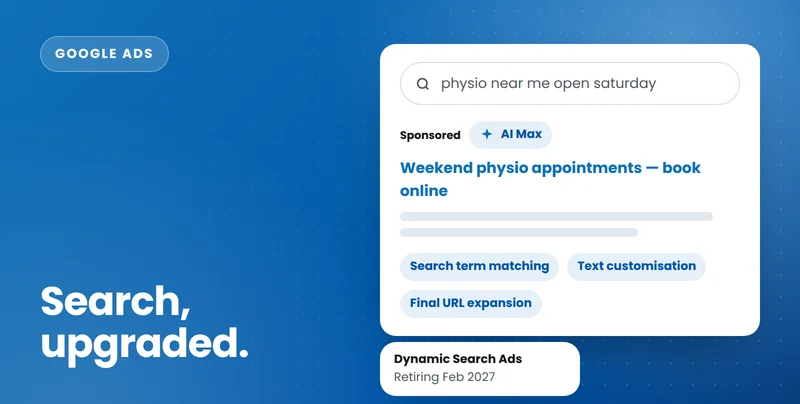
- 1–28 February 2027 (related): Google is also permanently removing the creation of new Dynamic Search Ad (DSA) groups as DSA moves into AI Max for Search. If your account runs DSA as well, February is a double deadline. More on the AI Max changes.
Why does this matter so much for Sydney businesses?
The February deadline looks comfortable until you take out the Christmas–January shutdown. For most Australian businesses, and plenty of agencies, the weeks between mid-December and late January are quiet, short-staffed or closed. That leaves only a handful of working weeks to rebuild ads, collect data and check that calls are still coming in.
The businesses hit hardest are the ones that rely on calls rather than forms: rubbish removal, plumbing, electrical, pest control, limousine and chauffeur services, veterinary clinics, allied health and other local services. If a campaign is built mainly on call-only ads and nobody touches it, the phone could go quiet in February with no warning in the account.
How do I check whether my account is affected?
- In Google Ads, go to Campaigns → Ads and add a filter for Ad type: Call ad.
- Note every campaign and ad group that contains a call-only ad.
- Check whether each of those ad groups also has an active responsive search ad. If the call-only ad is the only ad, that ad group will go dark in February 2027.
- Check Assets to see whether call assets are already set up at the account, campaign or ad group level, and whether the phone number is verified.
- Check Conversions to see how calls are currently tracked, so you can compare call volume before and after the switch.
If you manage several accounts, this check takes minutes per account and should be done now.
How do I migrate from call-only ads to RSAs with call assets?
- Build a responsive search ad in every affected ad group. Use up to 15 headlines and 4 descriptions. Put the call to action and the reason to call up front (for example “Same-Day Service – Call Now” or “Northern Beaches Vet – Open 7 Days”).
- Add a call asset with a verified number. Google introduced phone number verification for call assets, call-only ads and location assets in late 2025, so confirm your number is verified. Schedule the asset to your actual phone hours so calls aren’t encouraged when nobody can answer.
- Set up call conversion tracking. Track “calls from ads” using a Google forwarding number with a sensible minimum call length (60 seconds is a common starting point), and track calls from your website as a separate conversion. If you use Smart Bidding, make sure the call conversions you care about are set as primary. Our guide to spotting broken tracking covers the basics.
- Point the ad at a page built for calls. RSAs need a final URL, so send clicks to a fast, mobile-friendly landing page with the phone number as a large click-to-call button at the top.
- Run old and new side by side. Launch the RSAs while the call-only ads are still live so the new ads build history. Compare calls, cost per call and call quality over a few weeks.
- Pause the call-only ads once the RSAs are performing, well before February rather than on the deadline.
What do I lose and what do I gain?
What you lose: a format that only showed when someone could ring you, and some control. Call assets are not guaranteed to show on every impression, and some people will click through to your site instead of calling. If your site is slow or hides the phone number, those visits can be wasted spend.
What you gain: bigger ads with more room for headlines and selling points, a second path to convert (website visits and form leads as well as calls), and ads that work with Google’s current automation instead of a format it is retiring. Businesses with a strong landing page often get more total leads, not fewer.
Frequently asked questions
When do Google call-only ads stop working?
Existing call-only ads stop receiving impressions in February 2027. New call-only ads have not been creatable since February 2026.
Can I still create a call-only ad in Google Ads?
No. Google removed the option to create new call-only ads in February 2026, in both the Google Ads interface and the Google Ads API.
What replaces call-only ads?
Responsive search ads (RSAs) with call assets. The call asset adds your phone number and a call button to a standard search ad.
Will I still get phone calls from Google Ads?
Yes, if you set up call assets on your responsive search ads. Call assets aren’t shown on every impression, so track calls as a conversion and compare volume before and after you switch.
Do I need a website to run responsive search ads with call assets?
Yes. Responsive search ads need a final URL, so you need a landing page. A mobile-friendly page with a prominent click-to-call button gives the best result.
What happens if I do nothing?
Any ad group whose only ad is a call-only ad stops showing in February 2027, and the phone leads from it stop with it. Google Ads won’t pause the campaign for you, so it can look normal while generating nothing.
Is this connected to Google’s AI Max changes?
It’s part of the same shift. Google is moving search advertising toward responsive search ads and AI Max, and DSA ad group creation is also being permanently removed during February 2027.
How long does migration take?
For a small local account, building the new ads and call assets usually takes a few hours. Allow several weeks of running old and new ads side by side before you switch off the call-only ads.
Need a hand before the deadline?
Progressive Digital Marketing is a Google Partner agency based in Brookvale, managing Google Ads for local service businesses across Sydney. We’ll check your account for call-only ads, rebuild them as responsive search ads with call assets, and set up call tracking so you can see exactly what your phone leads are doing.
Call 02 9070 1295 or email info@progressivedigitalmarketing.com.au to book a free call-ad migration check.
Book a free call-ad migration check
We’ll find every call-only ad in your account and show you exactly what needs to change before February.